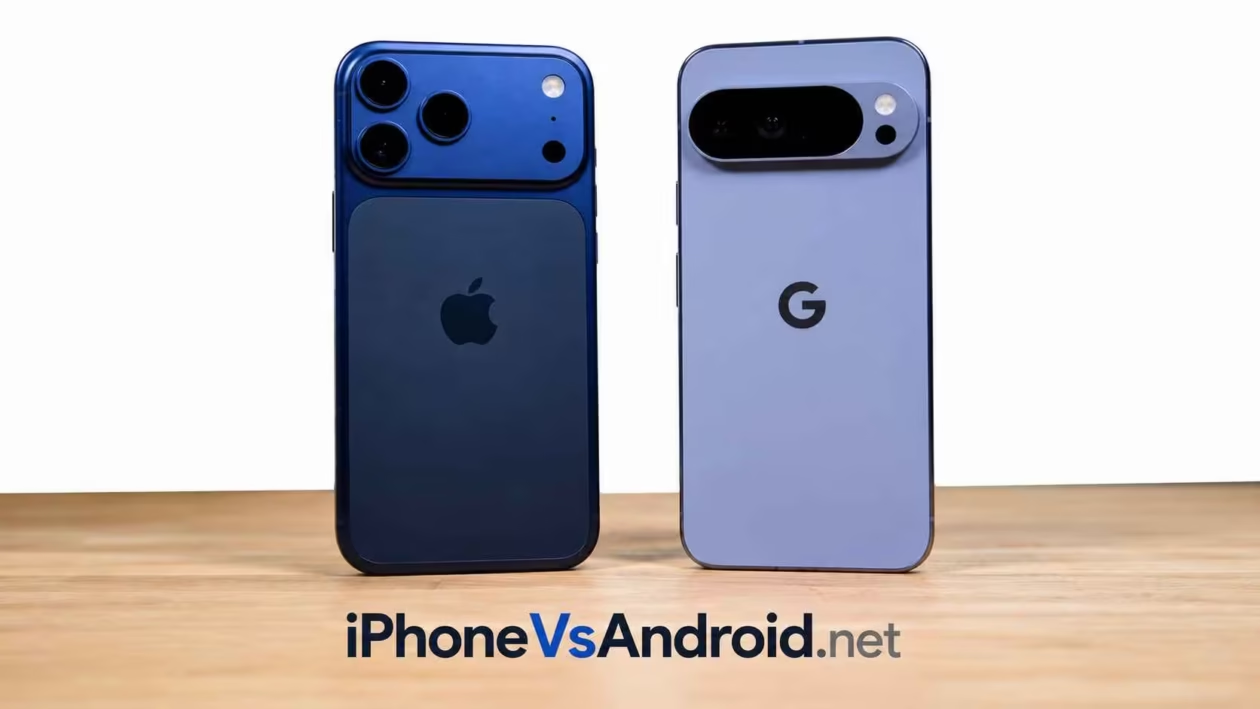
Before we get into specs, I need to say something most comparison posts skip: these two phones aren’t really the same size class. The iPhone 17 Pro Max is a 6.9-inch phone. The Pixel 10 Pro is 6.3 inches. That’s not a small gap, it’s the difference between a phone that needs two hands and one that mostly doesn’t. Keep that in mind, because it colors everything else here.
Here’s the quick rundown, then we’ll get into what actually matters.
Quick Comparison
| Feature | iPhone 17 Pro Max | Pixel 10 Pro |
|---|---|---|
| Display | 6.9″ Super Retina XDR OLED, 120Hz, 3000 nits peak | 6.3″ LTPO OLED, 120Hz, 3300 nits peak |
| Resolution | 1320 x 2868 px (~460 ppi) | 1280 x 2856 px (~495 ppi) |
| Display Protection | Ceramic Shield 2 | Corning Gorilla Glass Victus 2 |
| Chip | Apple A19 Pro | Google Tensor G5 (3nm) |
| RAM | 12GB | 16GB |
| Storage | 256GB / 512GB / 1TB / 2TB | 128GB / 256GB / 512GB / 1TB |
| Main Camera | 48MP Fusion triple array, 8x optical-quality zoom | 50MP main (f/1.7, OIS) |
| Ultra-Wide Camera | 48MP (part of Fusion array) | 48MP, f/1.7 |
| Telephoto Camera | Included in 8x optical-quality zoom | 48MP, 5x optical zoom, f/2.8 |
| Front Camera | 18MP Center Stage | 42MP, f/2.2 |
| Video Recording | 4K @ 120fps, Dolby Vision | 4K @ 60fps, 1080p @ 240fps |
| Battery | ~4,823–5,088mAh, up to 39 hrs video playback | 4,870mAh |
| Charging | 40W wired, 25W wireless | 30W wired, 15W wireless (Qi2) |
| Water Resistance | IP68, 6m for 30 minutes | IP68 |
| Build | Aluminum unibody, Ceramic Shield 2 | Aluminum frame, Gorilla Glass Victus 2 back |
| Dimensions | 8.8mm thick (full dimensions unconfirmed) | 152.8 x 72 x 8.6mm |
| Weight | 233g | 207g |
| Biometrics | Face ID | Ultrasonic in-screen fingerprint |
| Operating System | iOS 26 | Android 16 |
| Connectivity | Wi-Fi 7, USB-C | Wi-Fi 7, Bluetooth 6.0, USB-C 3.2 |
| AI Features | Apple Intelligence | Gemini, deepest integration on any Android phone |
| Starting Price | $1,199.99 | $999 |
The Short Answer: If you want the biggest screen and the longest battery life, get the iPhone 17 Pro Max. If you want a phone that’s actually easy to hold, a phenomenal camera for $200 less, and the sharpest AI features on Android, get the Pixel 10 Pro. Ask yourself one thing first: do you want a big phone or a normal-sized one? That answer decides more than anything else here.
Size and Feel
I said it above and I’ll say it again because it actually matters more than most spec comparisons admit: these phones don’t feel remotely similar in the hand. The Pixel is noticeably easier to use one-handed, fits smaller pockets better, and at 207 grams it’s 26 grams lighter than the iPhone. If you’ve ever complained that flagship phones got too big, the Pixel 10 Pro is the answer. The 17 Pro Max is not trying to solve that problem at all.
Display
Both are excellent OLED panels at 120Hz, and honestly the brightness numbers are close enough that you won’t notice a real difference outdoors. Pixel edges it slightly on paper at 3300 nits peak versus Apple’s 3000. But the bigger factor here isn’t brightness, it’s size. More screen real estate on the iPhone means more comfortable video watching and reading. Less screen on the Pixel means it’s easier to actually hold.
Camera
This is genuinely close, closer than I expected going in.
Google’s computational photography reputation is well earned. The Pixel’s 50MP main sensor paired with Google’s processing produces shots that often need zero editing, especially in tricky lighting where phones usually struggle. The 5x optical zoom on the telephoto lens is solid too, not quite matching Apple’s 8x reach, but good enough for most real use.
Apple’s approach leans on its three 48MP Fusion cameras and that longer 8x zoom, which wins if you’re actually trying to get close to something far away. But for everyday shots, portraits, food, random moments, I’d call the two cameras close enough that this shouldn’t be your deciding factor unless you specifically need that extra zoom range.
One category where Pixel clearly wins: the front camera. 42MP versus the iPhone’s 18MP is not a small gap, and it shows in selfie detail.
Performance
Apple’s A19 Pro is simply faster in raw benchmarks, and it’s not particularly close. But here’s the thing: Tensor chips have never been about winning benchmark charts. Google builds them around AI processing and Pixel-specific features, not peak gaming performance. If you’re a mobile gamer chasing max frame rates, the iPhone wins clearly. If you care more about how smart your phone feels day to day, that gap matters a lot less than the number suggests.
Battery
Close on paper, 4,870mAh on the Pixel versus roughly 4,823 to 5,088mAh depending on iPhone configuration. In practice, the iPhone’s efficiency and Apple’s claimed 39 hours of video playback likely give it a real edge in actual day-to-day battery life, though your mileage genuinely varies based on how you use either phone.
Charging is where it gets more interesting. Apple’s 40W beats Google’s 30W, and honestly, neither is fast by 2026 flagship standards, Samsung’s 60W makes both of these look a little behind. If charging speed is a priority for you, neither phone in this specific matchup is the strong choice, that’s worth knowing going in.
Software and AI
This is really the heart of the decision.
Pixel phones get Google’s AI features first, and Gemini’s integration on the Pixel 10 Pro goes deeper than it does on any other Android phone. If you want the most Google-native, AI-forward experience possible, this is genuinely the best phone for it right now.
iPhone means Apple Intelligence, iOS’s closed ecosystem, and everything that comes with owning other Apple devices. If your life already runs through a MacBook or iPad, that convenience is real and the Pixel doesn’t have an answer for it.
If you’re trying to decide between the two operating systems more broadly, not just these two phones, our iOS vs Android breakdown covers that bigger question.
Price
This might be the most important line in this whole post. The Pixel 10 Pro starts at $999. The iPhone 17 Pro Max starts at $1,199.99. That’s a $200 gap, and for a lot of people, that alone settles the argument before specs even matter.
Verdict
If you want the biggest screen, the longest zoom, the most battery life, and you’re already inside Apple’s ecosystem, the iPhone 17 Pro Max is the pick, and it costs more because you’re paying for all of that.
If you want a genuinely excellent phone that’s easier to hold, has a phenomenal camera for the price, leads on AI features, and saves you $200 up front, the Pixel 10 Pro is not a compromise pick. It’s arguably the better value of the two, full stop.
I’ll be honest, if someone asked me which one to buy without knowing anything else about them, my first question back would be “do you want a big phone or a normal-sized one.” That answer probably matters more than anything else on this page.
4 thoughts on “iPhone 17 Pro Max vs Google Pixel 10 Pro: Is Bigger Actually Better?”
[…] either way. Curious how the iPhone stacks up against Google’s flagship instead? Check our iPhone 17 Pro Max vs Pixel 10 Pro comparison for that angle. You’re picking which trade-offs you’re willing to live with for the […]
iPhone 17 Pro Max vs Samsung Galaxy S26 Ultra: Which Flagship Actually Wins? - Iphone Vs Android
[…] to see the Android side represented by Google’s own hardware instead of Samsung’s, our iPhone 17 Pro Max vs Pixel 10 Pro comparison covers that […]
iOS vs Android in 2026: Which Should You Actually Choose? - Iphone Vs Android
[…] depends entirely on what you bought. Pixel’s fast, which is part of why we liked it in our Pixel 10 Pro comparison. Plenty of budget Android brands take months, if they bother at […]
iPhone vs Android Security: Which Actually Protects You More in 2026? - Iphone Vs Android
[…] of reasons Samsung wins other categories in that comparison. And if you’re deciding on the Pixel over an iPhone, just know you’re trading some resale value for a lower upfront price and a better camera for […]
iPhone vs Android Resale Value: Which Actually Holds Its Worth in 2026? - Iphone Vs Android